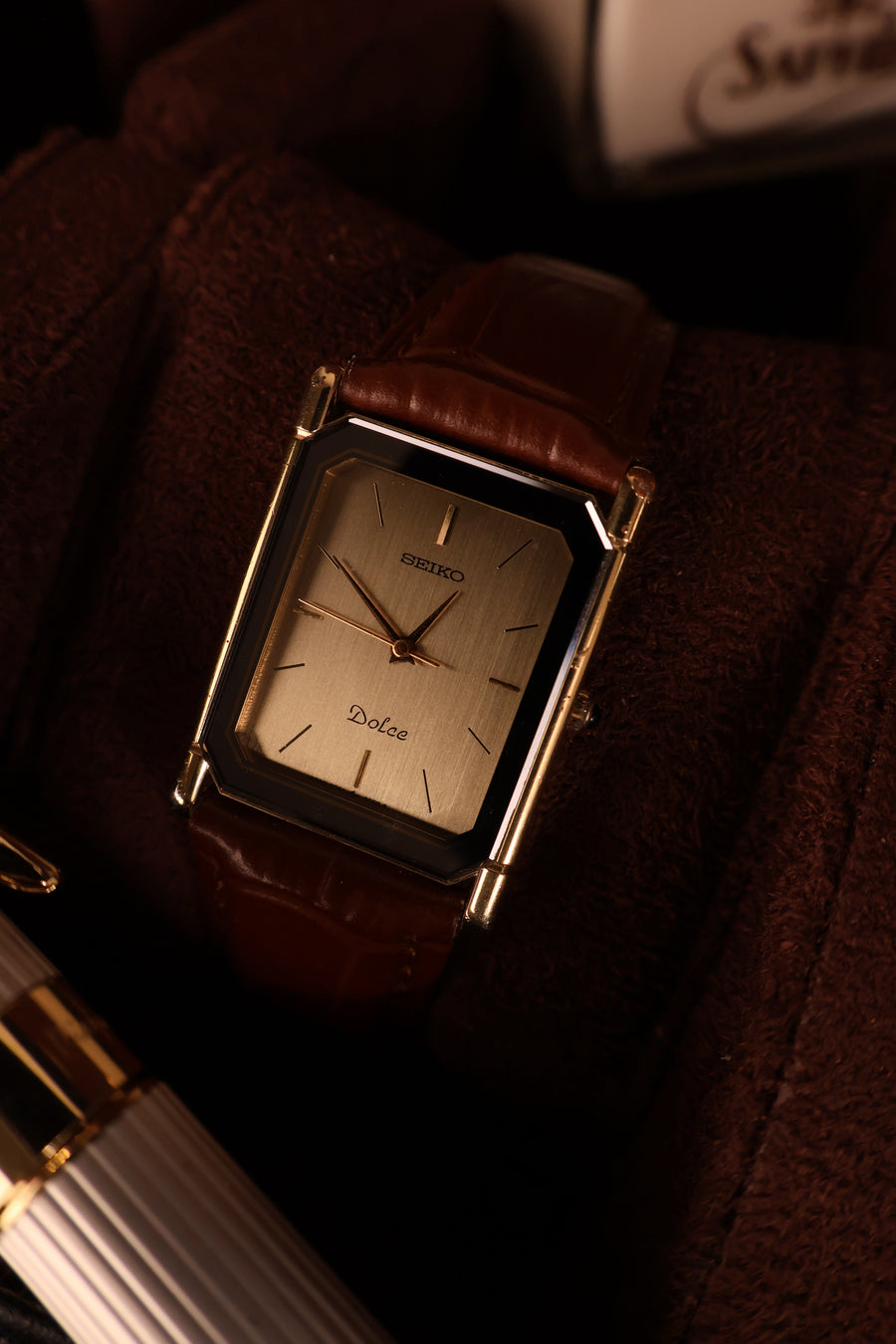
Omega Seamaster “Baby Flightmaster”
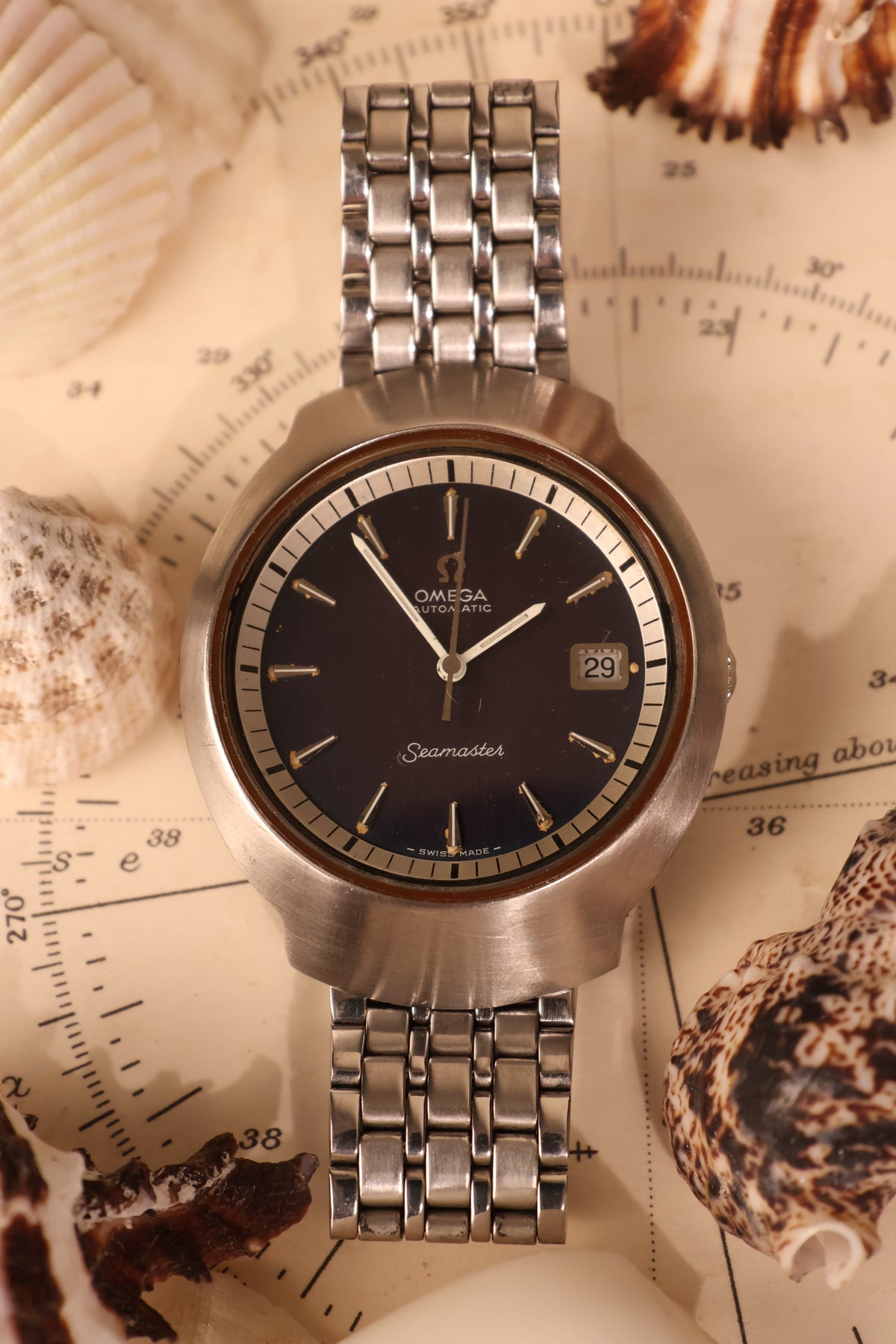
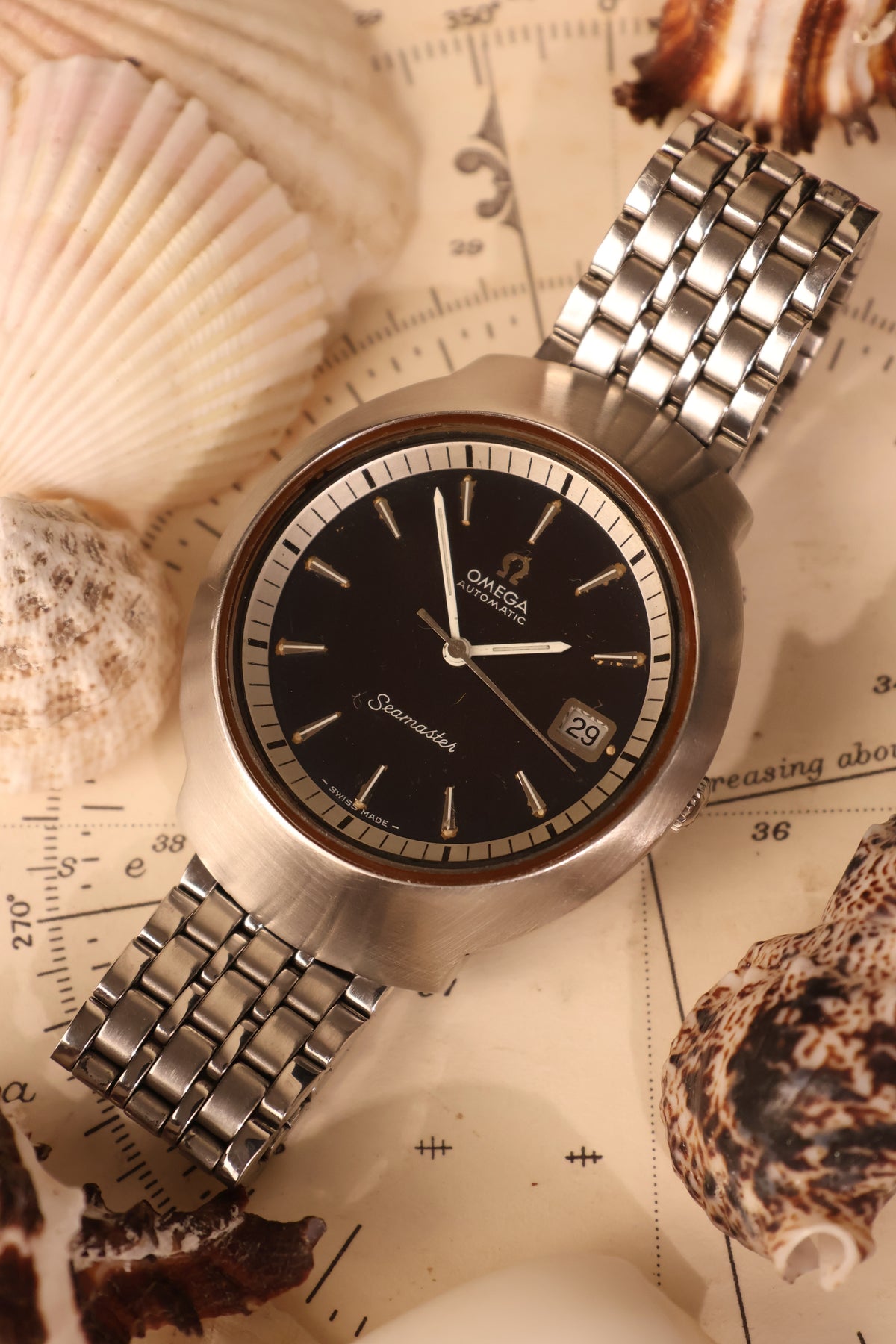
Omega Seamaster “Baby Flightmaster”
Overview
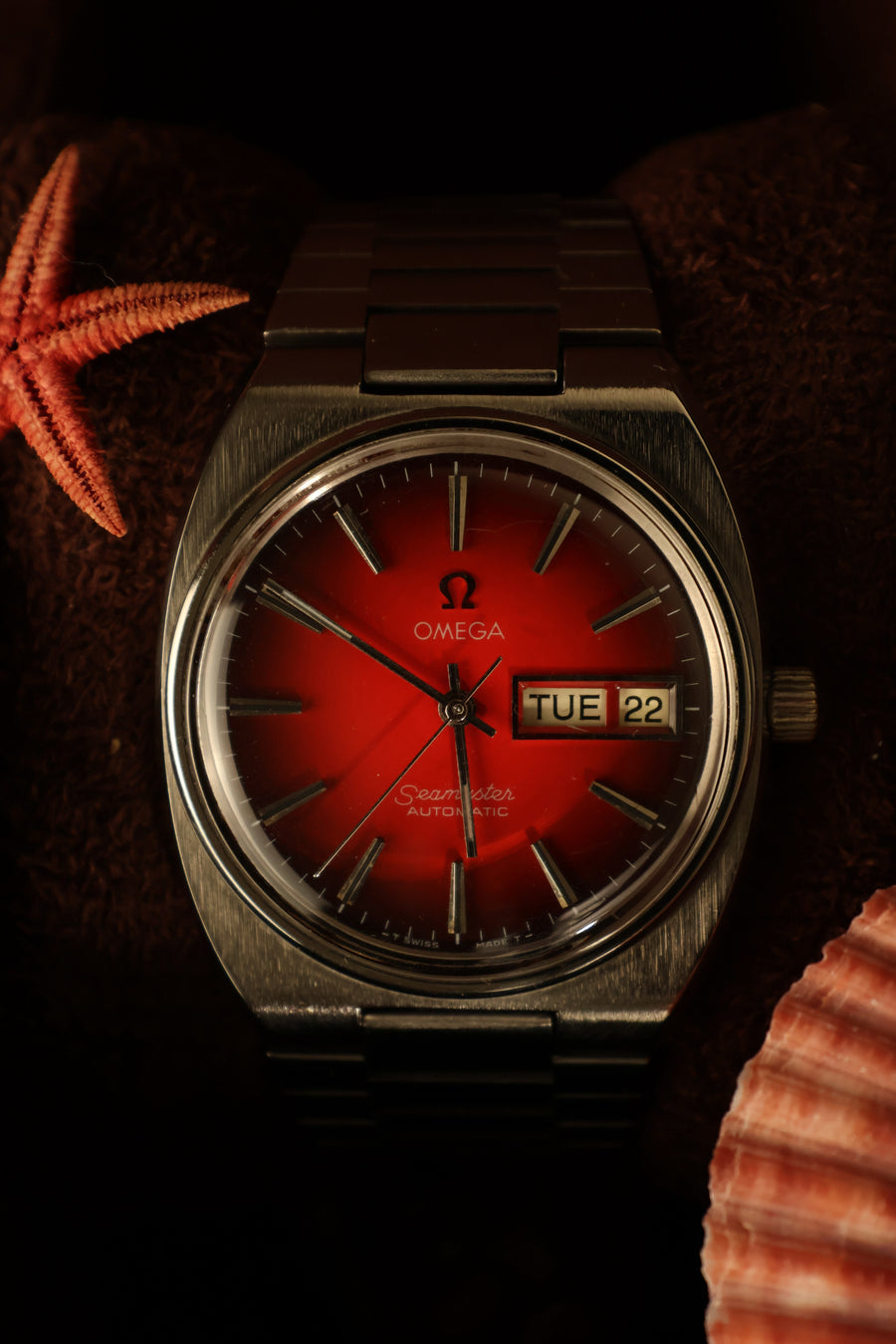
An authentic vintage Omega Seamaster “Baby Flightmaster”, reference 166.090, dating to circa 1970.
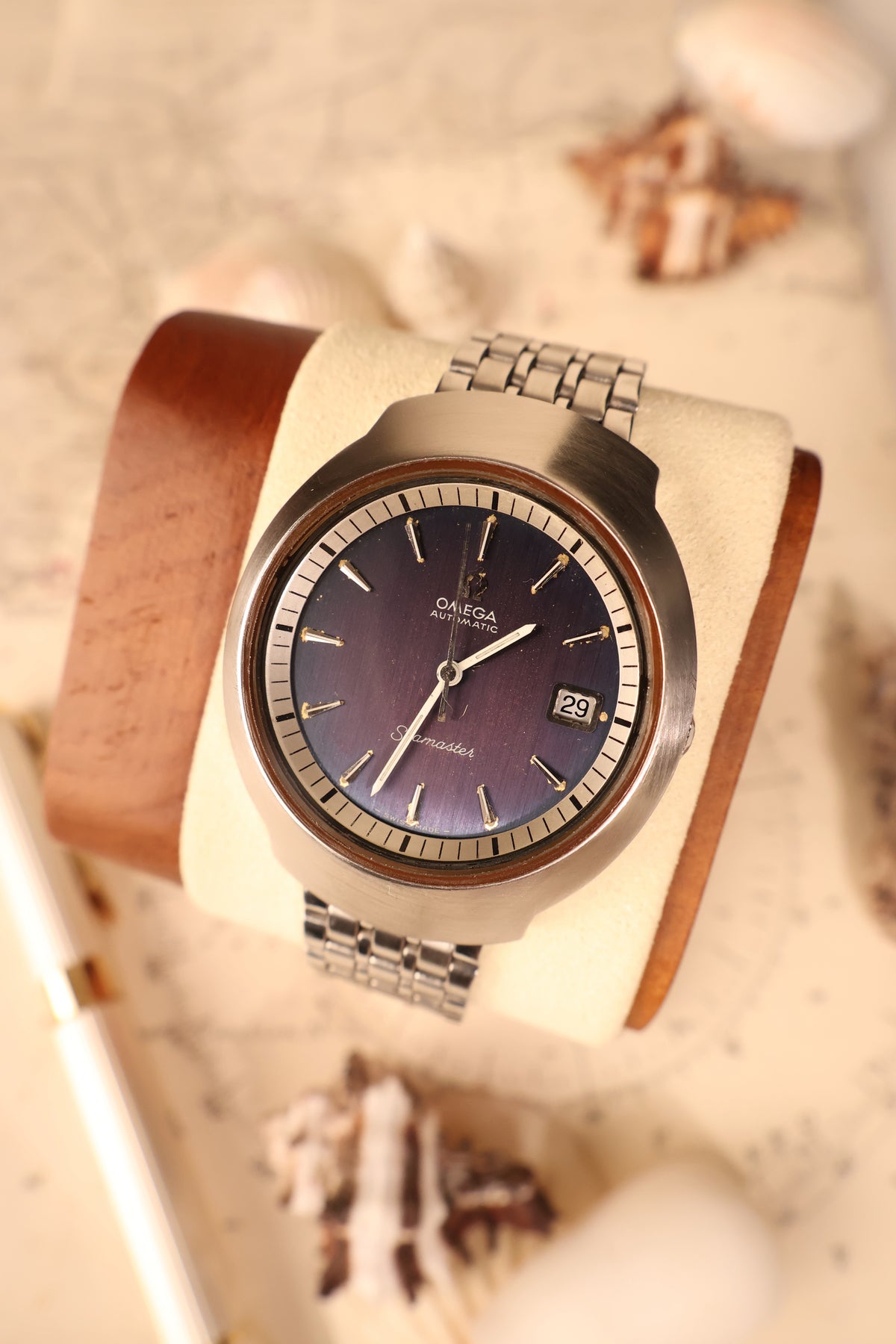
The “Baby Flightmaster” name is an affectionate collector term referring to the watch’s distinctive cushion/“TV”-style case, which recalls the bold geometry of Omega’s larger Flightmaster chronograph while offering a considerably more compact and wearable automatic format.
This example captures the character of Omega’s early-1970s Seamaster range particularly well, combining its distinctive case profile with a striking dark brushed blue dial and its original Omega stainless steel bracelet.
Case & Construction
- Reference: 166.090
- Era: Circa 1970 / early 1970s (reference produced c. 1969–1972)
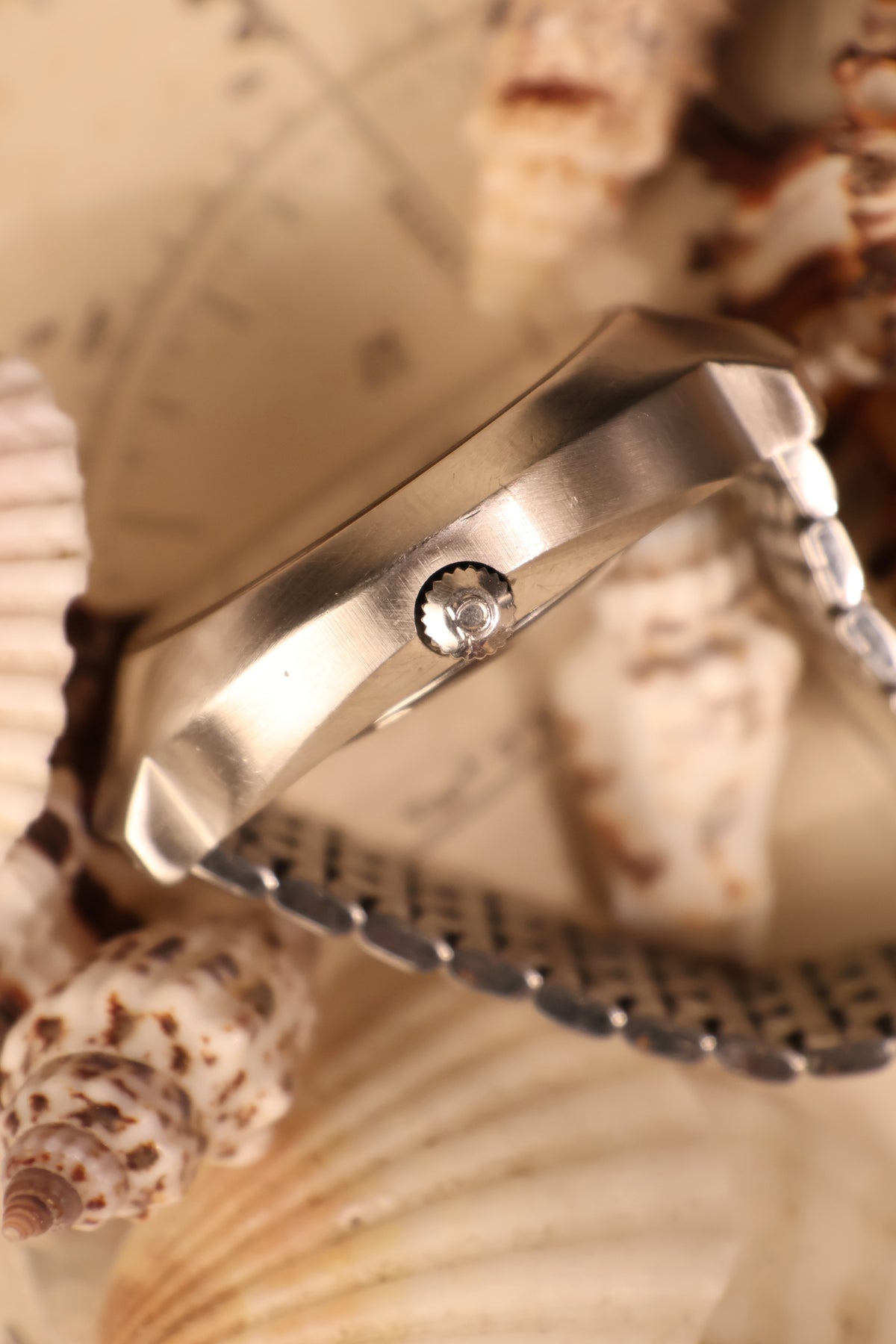
- Case: Approximately 38.5 mm stainless steel (excluding crown), with the characteristic cushion/“TV” profile and a combination of brushed and polished surfaces
- Crystal: Original domed acrylic crystal, clear and crisp
- Crown: Signed Omega crown at 3 o’clock
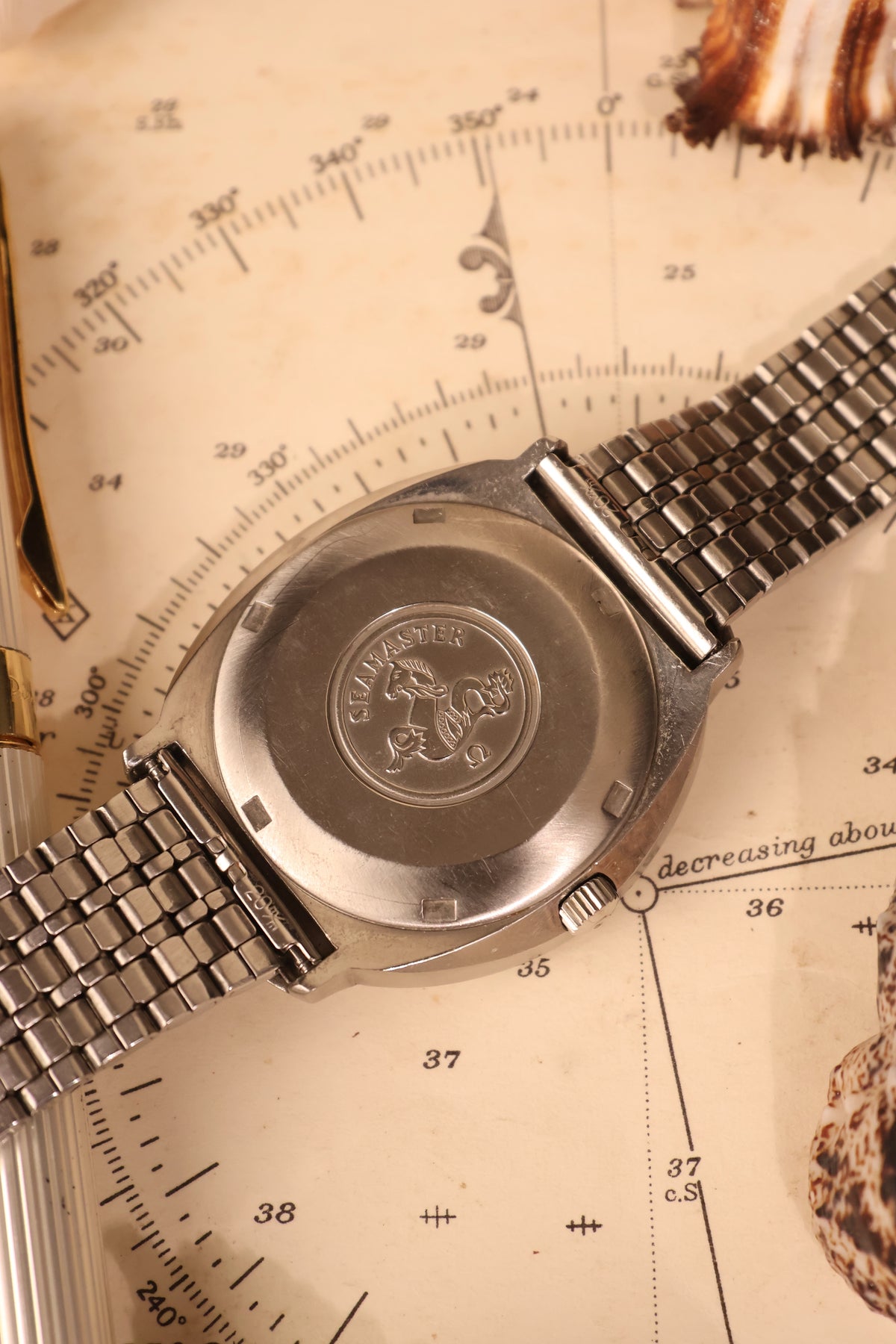
- Caseback: Screw-down caseback featuring the classic Omega Seamaster hippocampus/seahorse emblem
- Movement: Omega Calibre 1002 automatic movement, 20 jewels, 28,800 vph, with quick-set date function; currently running well and keeping accurate time
Dial & Hands
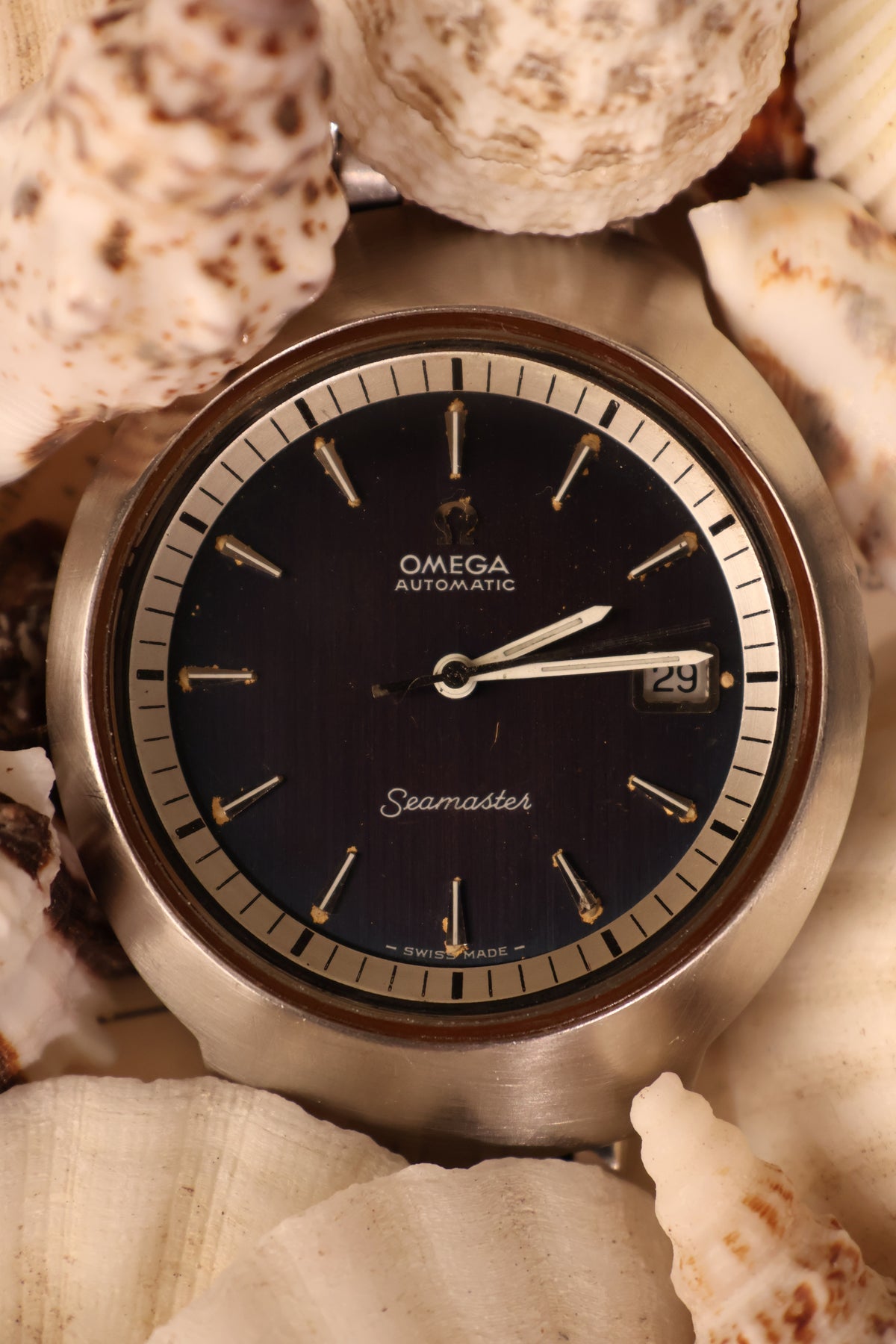
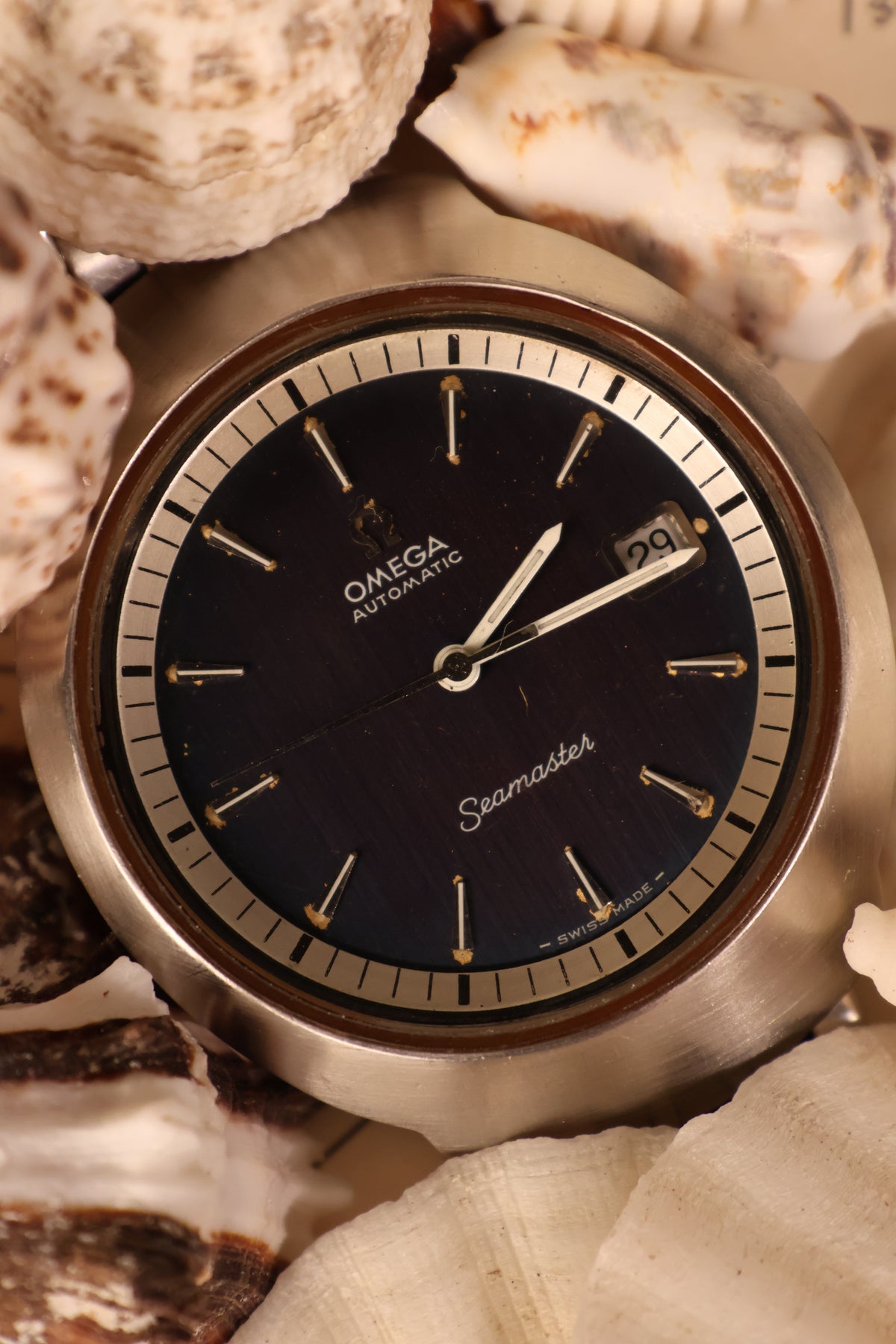
The defining feature of this example is its deep dark blue vertically brushed dial, which can shift from midnight blue to almost black depending on the light.
The dial displays subtle natural ageing while retaining its original character.
- Omega logo and “AUTOMATIC” at 12 o’clock
- “Seamaster” script below centre
- “SWISS MADE” at 6 o’clock
- Applied faceted baton hour markers with original luminous material
- Polished baton hands with luminous material
- Slender central seconds hand
- Date aperture at 3 o’clock
- Quick-set date function currently operating correctly
Bracelet
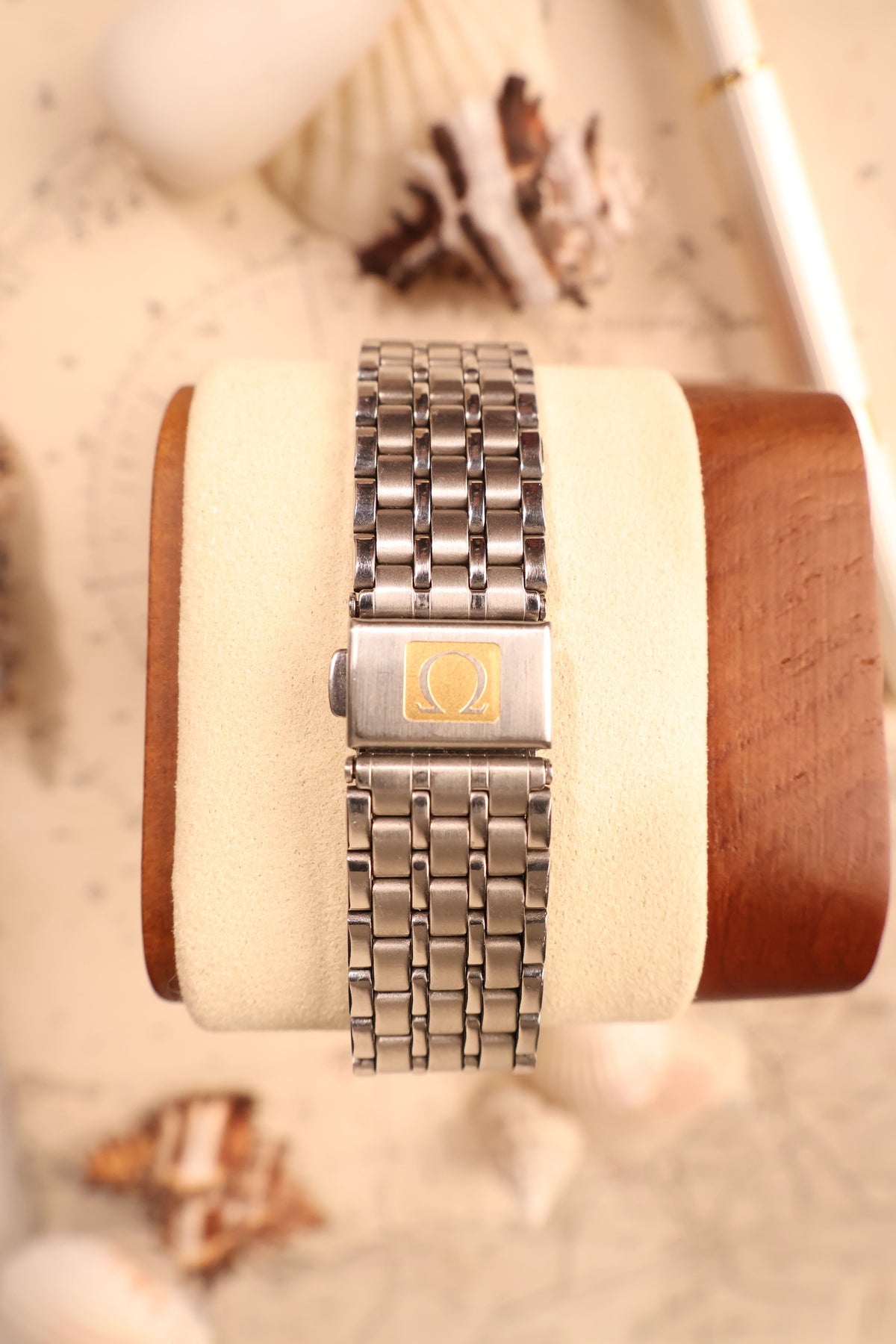
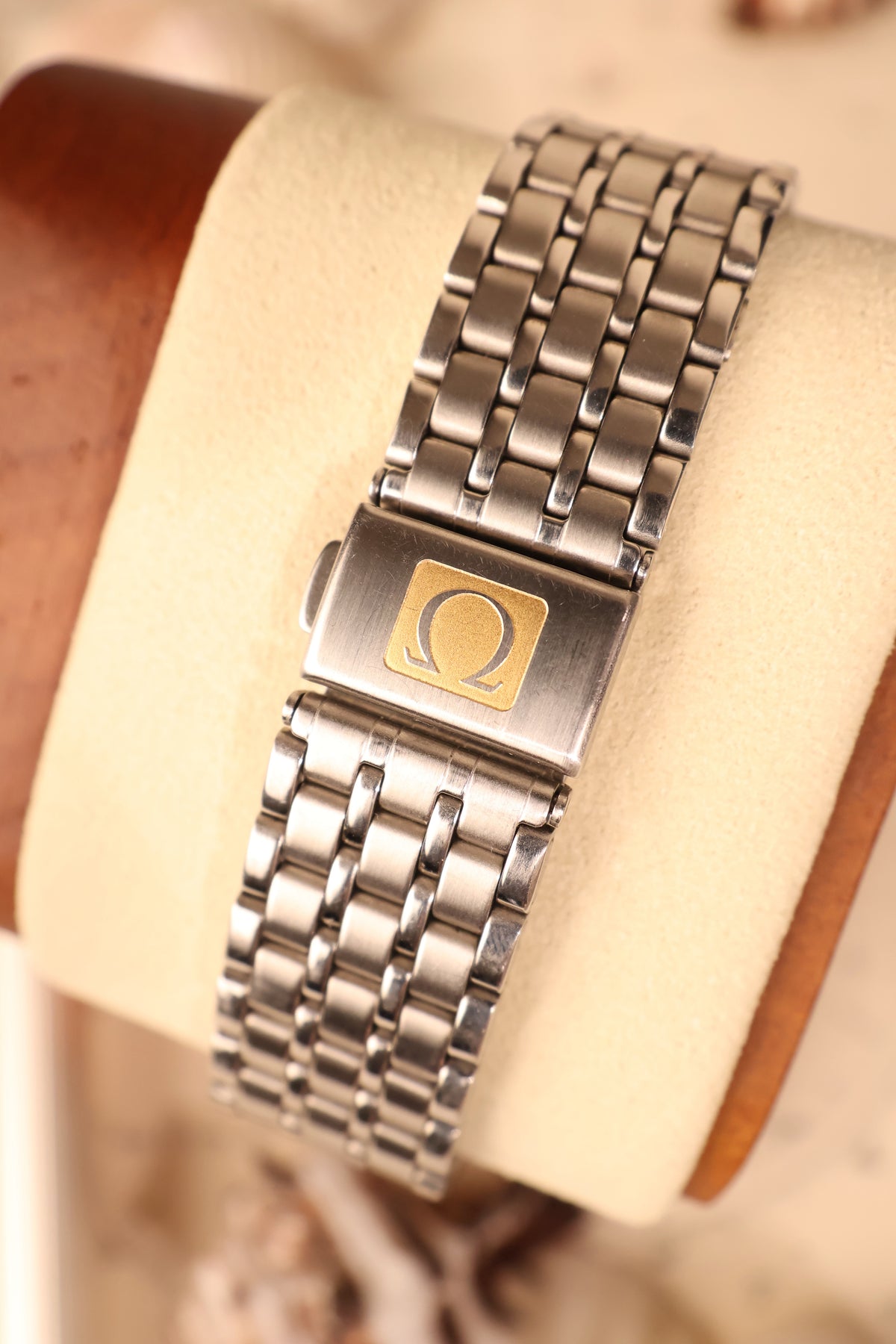
The watch is fitted with its original Omega stainless steel multi-link bracelet, complete with a signed folding clasp featuring the Omega Ω emblem.
The bracelet is matching and correct to the watch.
Condition
The watch presents with the honest character expected of a vintage timepiece from the early 1970s.
The case shows light signs of age and wear, without heavy polishing or significant damage noted. The dark brushed blue dial remains particularly striking, retaining its original appearance and natural vintage character.
The Omega Calibre 1002 automatic movement is currently running well, and the date function is operating correctly.
As with any vintage timepiece, minor signs of age and previous use should be expected and are part of the character of the watch.
Highlights
- Omega Seamaster “Baby Flightmaster”
- Reference 166.090
- Circa 1970
- Distinctive cushion/“TV”-style stainless-steel case
- Deep dark blue vertically brushed dial
- Original dial with natural vintage character
- Omega Calibre 1002 automatic movement
- Quick-set date
- Original signed Omega crown
- Original Omega stainless steel bracelet
- Seamaster hippocampus caseback
- Approximately 38.5 mm
- Light and honest vintage wear
Why “Baby Flightmaster”?
The “Baby Flightmaster” nickname is used by collectors because the watch shares the distinctive cushion-shaped case language associated with Omega’s larger Flightmaster chronograph, while being presented in a smaller and simpler automatic format.
It offers the visual character of the period’s bold 1970s Omega designs in a more compact and versatile form, making it a particularly distinctive example of the Seamaster family.